Tiger and Magpie
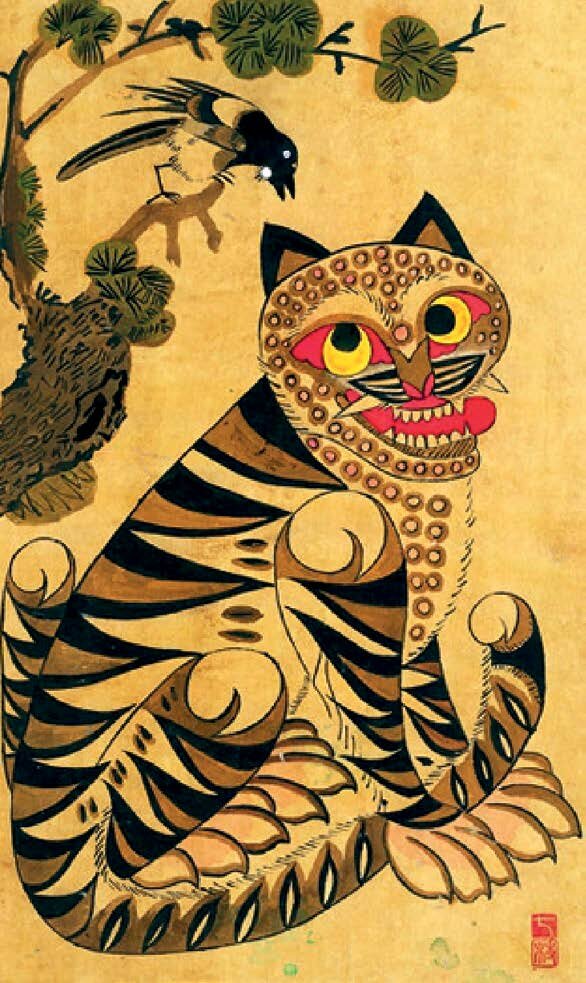
The pairing of the tiger and the magpie is one of the most beloved and culturally distinctive motifs in the entire Korean artistic tradition, and it belongs almost exclusively to the Minhwa folk painting genre that flourished during the Joseon dynasty. In these paintings the tiger — traditionally the most fearsome creature in the Korean natural world and a figure of immense supernatural authority — is rendered not with the terrifying gravitas one might expect but with a disarming, almost comedic warmth. The Minhwa tiger has wide, round eyes that convey more bewilderment than menace, a stout and somewhat ungainly body that suggests good-natured bulk rather than predatory lethality, and an expression that hovers perpetually between dignity and absurdity. Perched above him in the branches of a pine tree, the small and impudent magpie chatters downward with complete fearlessness, and it is in this relationship — the great beast humbled or at least gently mocked by the small, quick-witted bird — that the painting's deepest symbolic and social meanings reside. The tiger is a guardian figure, a protector of the household against evil spirits and malevolent forces, while the magpie is a harbinger of good news and good fortune, its call traditionally understood as an announcement that a welcome visitor or a happy event was approaching.
Together the tiger and magpie compose an image that operates simultaneously on several symbolic registers, and their enduring popularity across Joseon society — these paintings adorned the homes of commoners and aristocrats alike — speaks to the richness and accessibility of what they communicated. At the most straightforward level they are an auspicious pairing, the guardian tiger warding off misfortune while the magpie summons good fortune in its place, making the painting a kind of visual prayer for a protected and prosperous household. But Korean art historians have long read a more subversive social dimension into the motif as well — the clever, small magpie teasing or outwitting the powerful tiger has been interpreted as a popular fantasy of the common people gently triumphing over authority, a gentle and deniable form of social commentary encoded in the language of folk symbolism. This interpretive layer is entirely consistent with the broader character of Minhwa painting, which was produced largely outside the official court and literati traditions and carried within it the humor, the hopes, and the quietly irreverent spirit of ordinary Korean life. That a painting could be at once a household charm, a decorative object, and a wry commentary on power is a testament to the remarkable sophistication that folk art achieves when it is deeply rooted in the lived experience of the people who make and treasure it.