
Art of the Orient is a curated sanctuary devoted to the painted traditions of East Asia — the civilizations of China, Japan, and Korea — whose aesthetic legacies have shaped human visual culture for millennia. This website does not seek merely to catalogue images, but to illuminate the philosophies, techniques, and histories that breathe life into every brushstroke. Whether you are a scholar, a student, or simply someone moved by beauty, these galleries invite you into worlds where art was never a luxury but a language — a way of speaking about heaven, nature, power, and the fragile grace of mortal existence.
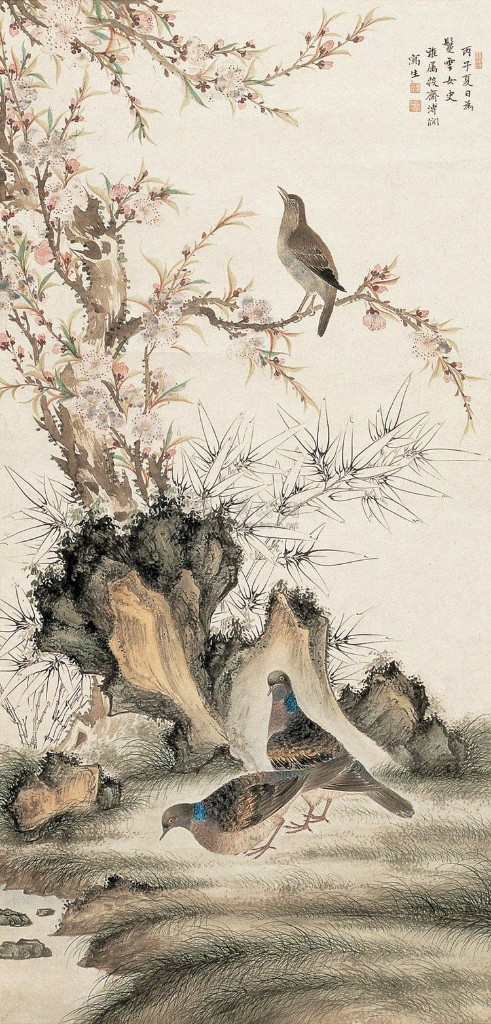
The Chinese gallery presents works spanning the great dynasties — from the misty landscapes of the Song to the courtly refinements of the Ming and Qing — wherein painters did not merely depict the world but meditated upon it. Mountains rise through veils of atmospheric ink wash; solitary scholars disappear into towering wilderness; monasteries cling to cliffsides as quiet declarations of civilization's endurance amid the turbulence of history. To stand before a Chinese landscape is to understand that the painter was as much a poet and a philosopher as an artist, encoding within hills and rivers an entire cosmology of order, virtue, and the relationship between humanity and the natural world. Yet Chinese painting encompasses far more than the grand landscape tradition alone. The bird-and-flower genre — one of the most beloved and long-practiced in the entire history of East Asian art — brought the painter's eye into intimate contact with the natural world at its most delicate scale: a warbler perched upon a flowering plum branch, doves settled among mossy rocks and wind-bent grasses, petals rendered with a precision that borders on the devotional. In these quieter works, the same philosophical attentiveness that governs the landscape is simply directed toward smaller, more fleeting beauties — a reminder that in Chinese aesthetic thought, the cosmos is legible in a single blossom no less than in a mountain range stretching to the horizon.
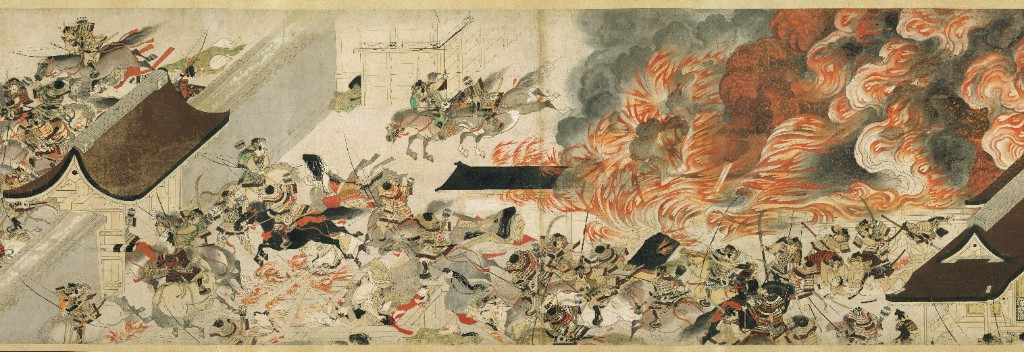
The Japanese gallery traces an artistic tradition of remarkable discipline and equally remarkable diversity — from the sweeping decorative grandeur of Rinpa screen painting to the intimate psychological precision of ukiyo-e woodblock prints. Japanese painters perfected the art of negative space, understanding that what is left unpainted speaks as eloquently as what is rendered. Across centuries, themes of transience, seasonal change, the beauty of the impermanent moment, and the tension between refined courtly culture and the rawness of nature recur with an almost meditative insistence, producing an art that is simultaneously deeply Japanese and profoundly universal in its emotional resonance. Yet Japanese painting is equally capable of tremendous dynamism — of chaos rendered with total compositional control. Warriors surge across handscrolls in cascading waves of armor, horseback, and flame; narrative scenes unfold with a cinematic momentum that pulls the eye relentlessly forward, each figure caught at the precise instant of maximum expressive force. It is one of the defining achievements of the Japanese pictorial tradition that it could hold these two seemingly contrary impulses — the stillness of a single ink-brushed branch and the furious energy of a battlefield in conflagration — within a single, coherent aesthetic vision, united by an unwavering commitment to the expressive power of line.
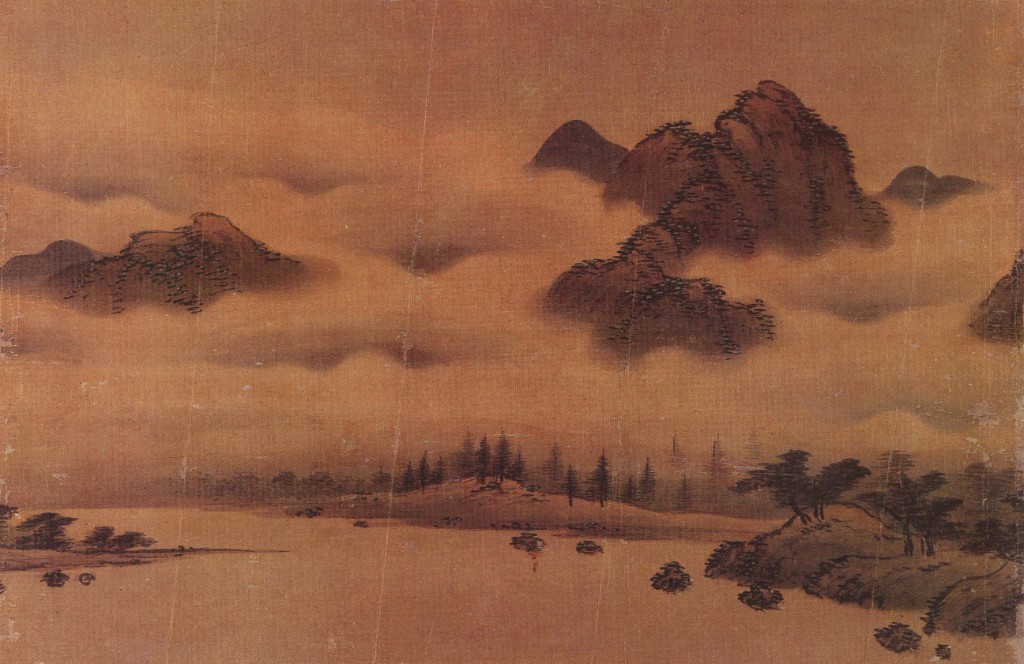
The Korean gallery introduces visitors to a tradition that is perhaps less familiar to Western audiences yet no less rich in its achievements and its cultural depth. Korean painting ranges from the exuberant folk paintings of the Joseon period — bright, symbolic, alive with auspicious animals and mythological creatures — to the contemplative ink landscapes produced by scholar-painters steeped in the literati tradition of the peninsula. Korea's artistic identity is its own: informed by its neighbors but never reducible to them, distinguished by a directness of expression, a love of vivid color, and a deep investment in imagery that speaks to the everyday hopes and spiritual aspirations of its people.
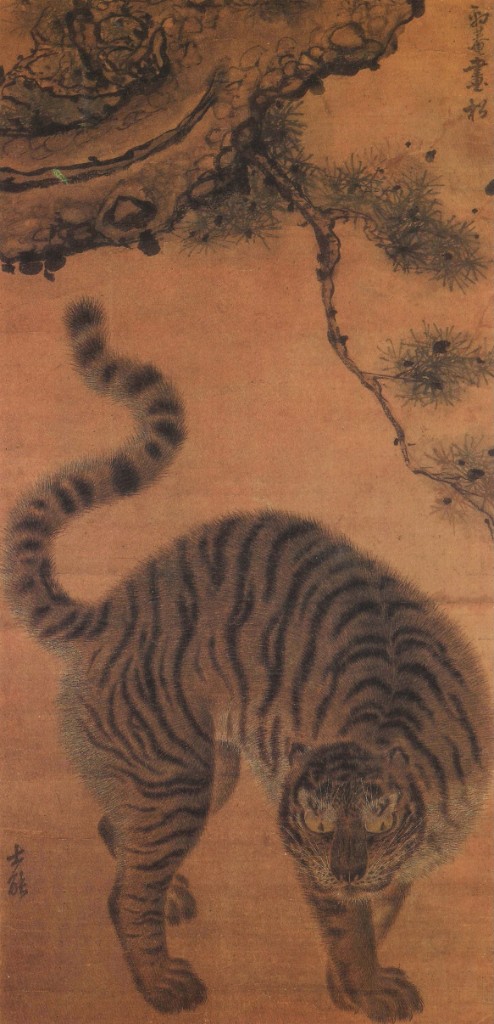
Among the features of this website is a dedicated exploration of the major painting styles that define each tradition. Visitors will find examinations of gongbi, the meticulous Chinese technique of fine-line brushwork and brilliant mineral pigments used to render imperial subjects with almost jewel-like precision; of ink wash painting and its cultivation of spontaneity within rigorous discipline; of the Rinpa school's breathtaking command of gold leaf and botanical decoration; and of Minhwa, the vibrant Korean folk painting tradition in which tigers, magpies, peonies, and the ten symbols of longevity populate a world suffused with symbolism and communal joy. Understanding these styles is not merely a matter of art history — it is an entry point into the value systems and aesthetic philosophies that each culture held most dear.
No encounter with East Asian painting is complete without an understanding of its extraordinarily rich symbolic vocabulary. Objects, animals, plants, and landscapes are never purely decorative; they carry layered meanings accumulated over centuries of literary, religious, and philosophical tradition. A crane ascending above the clouds speaks of immortality; a bamboo bending but not breaking in the wind embodies the scholar's moral resilience; chrysanthemums signal retirement from public life into private cultivation; and the monastery glimpsed behind a curtain of mist in a Chinese landscape suggests the persistence of civilized order in ages of dynastic upheaval. The symbolism section of this website is designed to serve as a practical guide to reading these visual languages — transforming what might first appear as decoration into a form of legible, eloquent speech.

Finally, Art of the Orient recognizes that no appreciation of these works can be truly complete without some understanding of how they were physically made. The section on production methods explores the creation of the tools and materials that defined these traditions: the grinding of mineral pigments from azurite, malachite, and cinnabar; the preparation of silk and paper grounds that determined how ink and color would flow and settle; the casting and care of the brushes upon which an artist's entire expressive range depended; and the slow, meditative processes by which woodblock prints were carved, inked, and pressed into the luminous images we now regard as masterpieces. To understand the making of East Asian painting is to understand something of the devotion — the sheer disciplined love of craft — that these traditions demanded of their practitioners.