Sipjangsaeng – The Ten Longevity Symbols
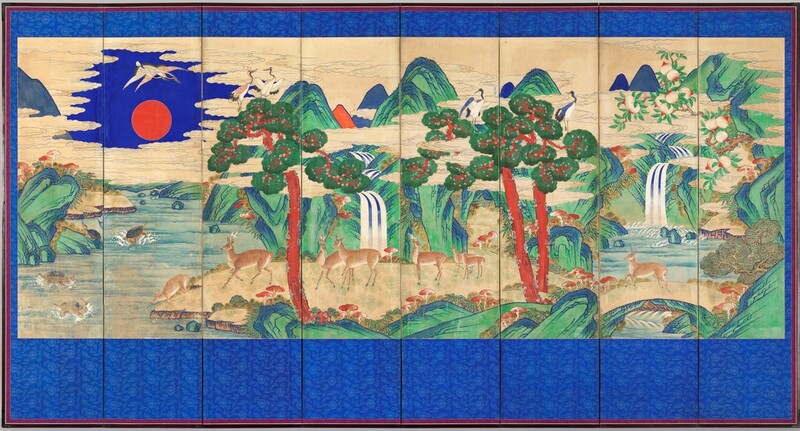
The Sipjangsaeng — literally the Ten Symbols of Longevity — constitute the most comprehensive and systematically developed auspicious symbol grouping in the Korean artistic tradition, and their appearance across painting, embroidery, lacquerwork, and decorative screens throughout the Joseon dynasty reflects a cultural preoccupation with long life, good health, and the blessings of a harmonious existence that permeated Korean society from the royal court to the humblest household. The ten symbols are the sun, the moon, the mountains, water, clouds, pine trees, bamboo, the crane, the deer, and the mushroom of immortality — though certain versions substitute the tortoise or the peach, and the grouping admits of some variation across different periods and contexts. What unites these ten otherwise disparate elements is their shared association with endurance, renewal, and the cyclical persistence of natural forces that outlast any individual human life. The sun and moon govern the rhythms of time itself; the mountains stand immovable through the ages; water flows eternally, carving stone and nourishing life across millennia; and the crane, the deer, and the tortoise were all understood in East Asian natural philosophy to be creatures of exceptional lifespan, their longevity making them living emblems of the vitality the paintings were designed to invoke.
As a compositional subject the Sipjangsaeng presented Korean painters with a remarkable creative challenge and opportunity — how to bring ten symbolically distinct elements into a single, coherent pictorial space without reducing the composition to a mere catalogue. The solutions developed over the course of the Joseon period are among the most visually inventive in the entire Korean tradition. In the great folding screen paintings produced for the royal court, the ten symbols are woven together into sweeping landscape compositions of extraordinary decorative richness, the cranes wheeling above pine-covered mountains while deer graze beside rushing streams and the mushroom of immortality glows among rocks drenched in the light of a stylized sun. The color palette in these works is characteristically vivid and unapologetically bold — deep mineral blues and greens, brilliant whites, warm ochres — a deliberate departure from the restrained ink wash aesthetic of the literati tradition that reflects Minhwa's roots in a popular visual culture that valued immediate emotional impact and celebratory abundance. To hang a Sipjangsaeng screen in a home or present one as a gift was an act of profound goodwill, an expression of the wish that the recipient might partake of the enduring vitality of the natural world itself — that their life might be as long as the mountains, as bright as the sun, and as graceful as the crane ascending through the clear morning air.