The Four Gentlemen – Plum, Orchid, Bamboo, Chrysanthemum
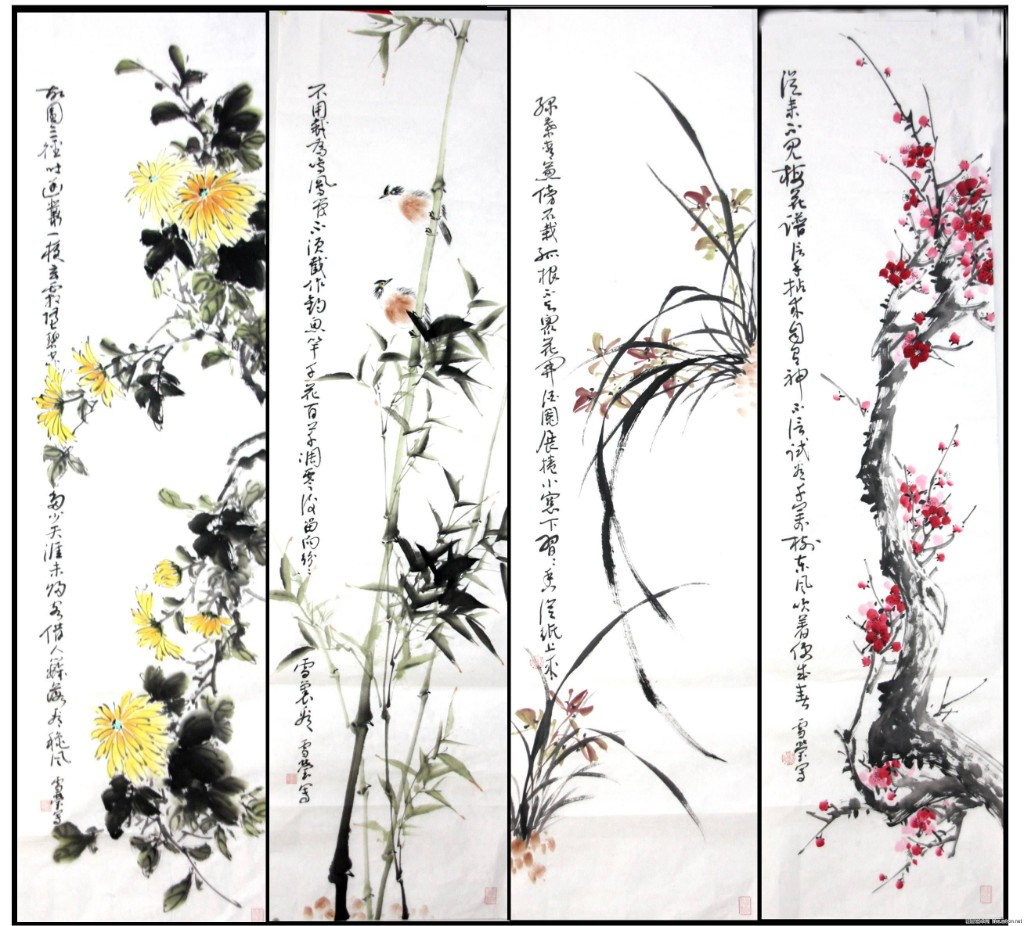
The Four Gentlemen — plum blossom, orchid, bamboo, and chrysanthemum — constitute perhaps the most enduring and morally charged symbolic grouping in the entire history of Chinese painting. The designation itself is telling: these are not merely plants but personalities, each one understood as an embodiment of the virtues that defined the Confucian ideal of the cultivated scholar-official. To paint them was less an exercise in botanical observation than a form of self-declaration — an assertion of the painter's own character and ethical commitments. The literati painters of the Song, Yuan, and Ming dynasties returned to these four subjects with an almost obsessive frequency precisely because the act of painting them was inseparable from the act of moral self-cultivation, the brush a instrument of character as much as of aesthetic expression.
Each of the four plants carries a distinct symbolic identity rooted in its natural behavior. The plum blossom, which flowers in the bitter cold of late winter before any other plant dares to bloom, embodies courage, resilience, and the refusal to be diminished by adversity — it is the scholar who maintains his integrity in times of political danger or personal hardship. The orchid, growing in remote valleys far from human attention, represents the cultivation of virtue in obscurity and the purity of a spirit that does not require an audience to remain principled. Bamboo, which bends dramatically in the wind yet never breaks and returns always to its upright posture, is the most explicitly moral of the four — a direct visual metaphor for the Confucian ideal of the gentleman who yields under pressure without surrendering his fundamental character. The chrysanthemum, blooming late in autumn when the warmth of the year has withdrawn, speaks of dignified retirement from public life, the scholar who has served his time in the world and withdraws into private cultivation without bitterness or regret. Together the four describe not a single virtue but a complete portrait of the ideal life — from the courage of youth through the quiet integrity of middle years to the serene withdrawal of old age.