Crane
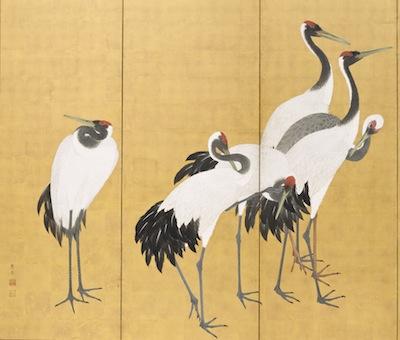
The crane holds a position of singular distinction in the symbolic vocabulary of East Asian art, revered across China, Japan, and Korea with a consistency and depth of feeling that few other creatures can match. Its physical presence alone seems to invite symbolic interpretation — the crane is tall, unhurried, and possessed of a natural elegance so pronounced as to appear almost deliberate, its white plumage and slow, measured movements suggesting a being that exists at some remove from the ordinary urgency of animal life. In Chinese tradition the crane is associated above all with longevity and immortality, and its connection to the Daoist tradition runs particularly deep — the crane was understood to be the mount of the immortals, the vehicle upon which enlightened sages traveled between the earthly realm and the celestial, and depictions of white-robed Daoist figures riding cranes through clouds and mist are among the most enduring images in Chinese religious painting. To give someone a painting of a crane was to wish them long life, spiritual elevation, and the serene detachment from worldly concern that the Daoist tradition held as its highest ideal.
In Korean and Japanese painting the crane retains its longevity symbolism while acquiring additional layers of cultural meaning particular to each tradition. In Korea the crane appears with great frequency in the Sipjangsaeng — the ten longevity symbols — where it is typically depicted in flight against a background of clouds and pine trees, its white form set against the deep blue of a stylized sky in a composition of vivid decorative power characteristic of the Joseon folk painting tradition. The pairing of crane and pine is one of the most beloved in all of Korean art, the two symbols reinforcing one another — the pine that endures through winter cold and the crane that lives for a thousand years combining into a single image of indomitable, graceful permanence. In Japan the crane carries these associations into the aesthetic world of the tea ceremony and the decorative arts, where its image appears on screens, ceramics, lacquerwork, and painted scrolls as an emblem of auspiciousness and refined longevity. Across all three traditions what is perhaps most striking is the consistency of the crane's symbolic identity — unlike the dragon, whose meaning shifts considerably between cultures, the crane speaks the same essential language everywhere it appears in East Asian art, its image a rare point of symbolic consensus in a region whose artistic traditions are far more diverse and independently developed than they are sometimes assumed to be.