Cherry Blossoms
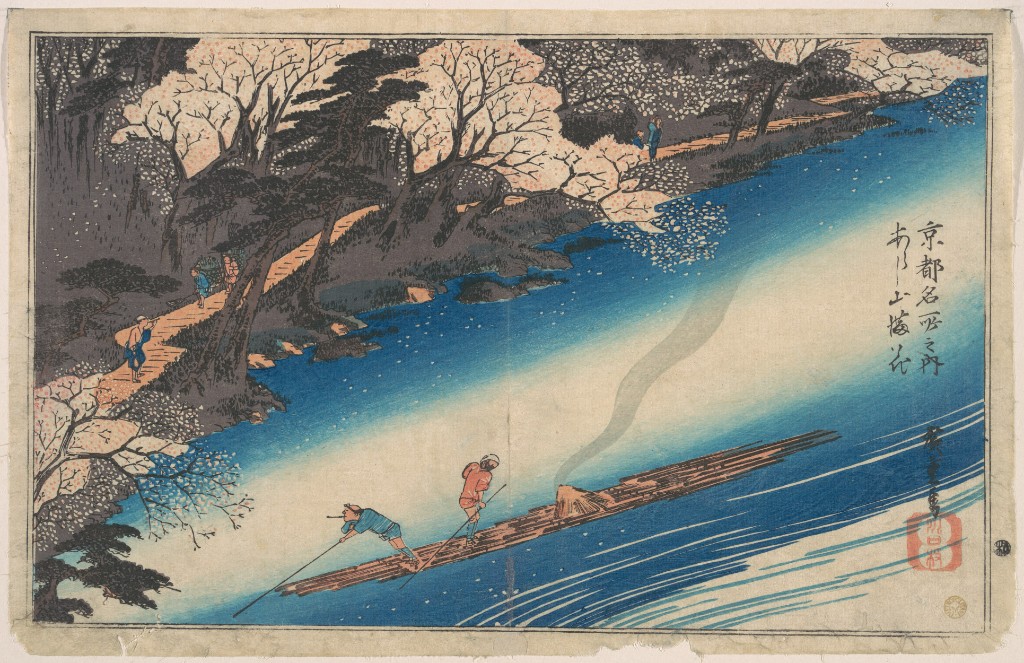
Few images in the entire history of world art are as immediately recognizable or as culturally freighted as the cherry blossom, and few symbols communicate their meaning with such economy and such emotional precision. The cherry blossom — sakura in Japanese — is the defining emblem of a concept that lies at the very heart of Japanese aesthetic philosophy: mono no aware, a phrase most often translated as "the pathos of things" or "the bittersweet awareness of impermanence." The cherry tree blooms with extraordinary and almost extravagant beauty, but its flowering lasts only days before the petals fall, and it is precisely this brevity that gives the blossom its symbolic power. In Japanese aesthetic thought, beauty is not diminished by transience — it is constituted by it. The cherry blossom does not symbolize impermanence despite being beautiful; it is beautiful because it is impermanent, its fleeting quality concentrating the viewer's attention and emotion in a way that a flower in perpetual bloom could never achieve. To paint the cherry blossom was therefore to meditate on one of the most fundamental truths of human experience — that the loveliness of the world and the brevity of the world are not separate facts but a single, inseparable reality.
In practical terms the cherry blossom permeates Japanese painting across virtually every school and period, from the aristocratic Yamato-e narrative scrolls of the Heian court — where cherry-viewing parties beneath blooming trees served as occasions for poetry, romance, and the melancholy contemplation of time's passage — to the bold decorative compositions of the Rinpa school, where blossoms are rendered with a stylized, almost abstract beauty that prioritizes emotional impact over botanical fidelity, to the ukiyo-e woodblock prints of the Edo period, where flowering cherry trees frame scenes of popular festival and urban pleasure with a delicate reminder of mortality lurking beneath the celebration. The fallen petal is as symbolically significant as the flower on the branch — perhaps more so, since it is in the act of falling that the blossom most completely fulfills its symbolic identity, drifting downward with a kind of serene acceptance that Japanese culture has long read as a model for the ideal attitude toward one's own mortality. It is worth noting that this symbolic vocabulary, so distinctly Japanese in its emotional register, has no precise equivalent in Chinese or Korean painting, and the cherry blossom stands as one of the clearest examples of how each of these three traditions, while sharing certain visual languages and philosophical inheritances, developed aesthetic values and symbolic systems that are finally and irreducibly their own.