Chaekgeori
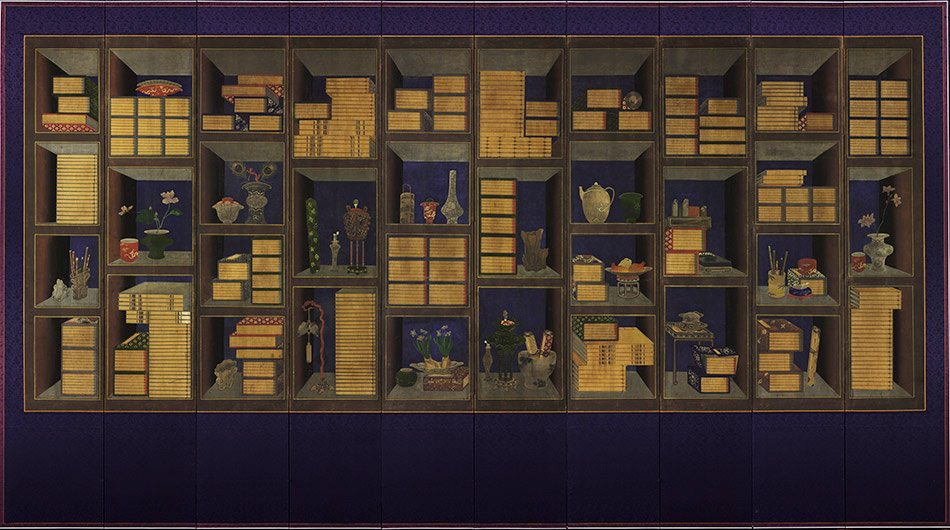
Chaekgeori — literally meaning "books and things" — is a genre of painting unique to Korea, emerging during the Joseon dynasty and reaching its greatest flowering in the eighteenth and nineteenth centuries. At first glance these paintings appear to be exercises in trompe-l'oeil illusionism, their stacked books, rolled scrolls, ceramic vessels, brushes, inkstones, and decorative objects arranged on shelves with a precision so convincing that the painted surface seems to recede into actual depth. But Chaekgeori is far more than a technical display. Every object depicted carries symbolic weight, and the paintings as a whole constitute a visual argument about the life worth living — an argument rooted in the Confucian veneration of learning, scholarship, and the cultivation of the mind as the highest human calling. The bookshelf, in this context, is not furniture but a moral landscape, and the objects arranged upon it are not possessions but declarations of value.
The books themselves are the centerpiece of the symbolic program, representing the classical Chinese texts — the histories, the poetry anthologies, the philosophical and ritual canons — that formed the foundation of Joseon scholarly education and defined the identity of the cultivated class. Alongside them, the Four Treasures of the Study — brush, ink stick, inkstone, and paper — appear with great frequency, signifying the scholar's daily practice and his devotion to the written and painted arts. Auspicious objects woven among the books deepen the symbolic register further: a ruyi scepter suggests the fulfillment of wishes and the blessing of a long and prosperous life; a bronze incense burner evokes ritual propriety and the cultivation of a refined domestic atmosphere; porcelain vessels and lacquer boxes speak of aesthetic discernment and material culture at its most elevated. Curiously, Chaekgeori was not painted exclusively for scholars — the genre was enormously popular across Joseon society, suggesting that the objects of the scholarly life had become aspirational symbols in a broader cultural sense, the painted bookshelf serving as an image of the educated, virtuous, and auspicious household that many Koreans wished to inhabit, whether or not they had the means or opportunity to do so in reality.